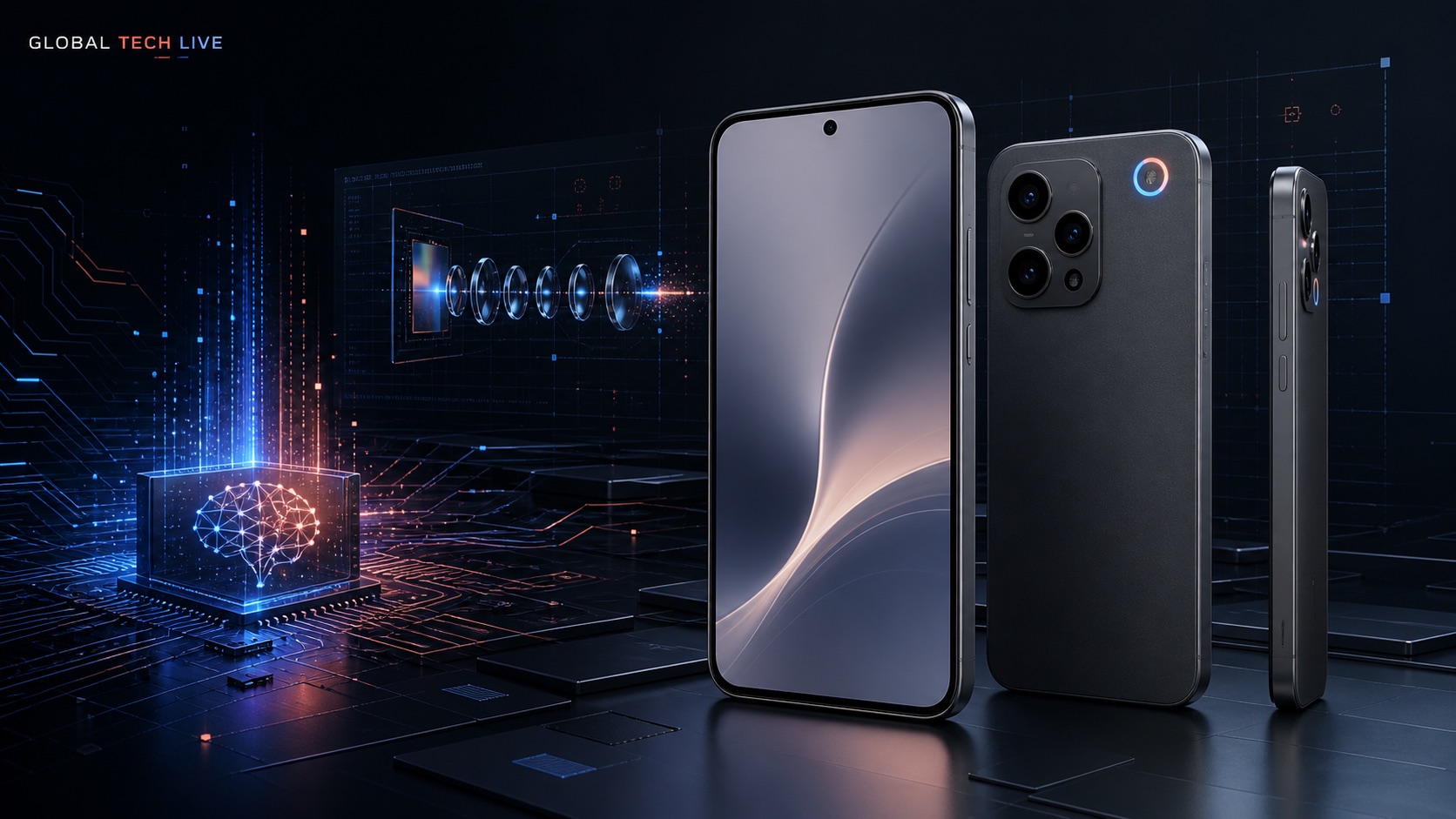
On the evening of August 12, 2026, Beijing time, Google released three candy bar phones, Pixel 11, Pixel 11 Pro and Pixel 11 Pro XL, through its official blog, and opened pre-orders on the same day. The starting prices announced by Google in the US market are US$899, US$1,099 and US$1,299 respectively. The three products are scheduled to be put on the Google Store and retail partners on August 20. The official page is signed by Spencer Boone. The structured data record was published at 14:00 UTC and was modified about six hours later. The page does not list a complete list of launch countries, so these US dollar prices cannot be converted to other market pricing, and the specific supply is subject to local store information.
Tensor G6 and basic camera
All three phones are equipped with Google's new generation Tensor G6 chip and run the latest Gemini Nano model. Google said that compared with the initial state of Tensor G5, the new chip allows web browsing to be 25% faster, application startup to be 15% faster, and TPU computing power to be increased by 50%. The company also claims that end-side AI tasks are up to 3.5 times faster, while using up to 3.5 times less energy. The relevant figures come from Google's internal data and pre-production equipment, and are not measurements of retail machines by independent laboratories. The page does not disclose the complete test set, sustained running time and temperature conditions for each task, nor does it publish sustained performance results covering all usage scenarios.
The base model of Pixel 11 switches to a 48-megapixel main camera sensor, and Google claims that its light sensitivity is 56% higher than that of the previous base model Pixel. The five-time telephoto of this phone can use up to 30-times Super Zoom with the support of Tensor G6; the official footnote explains that the relevant camera comparison objects are the Pixel 10, Pixel 9 and Pixel 8 series, and the zoom results will vary depending on the scene. These capabilities are not available in all cameras, apps, or shooting modes. The public page does not provide third-party sample comparisons, film success rates, or continuous shooting conditions. Therefore, at this stage, we can only confirm that Google has announced these hardware and zoom specifications.
Pro camera and HiLight reminder light
Pixel 11 Pro and Pixel 11 Pro XL also get camera updates. Google said that the two Pro phones use a new main camera sensor. The telephoto is still 48 million pixels, but the sensor’s light sensitivity is increased by 30%, and a five-fold portrait mode and up to 120-fold Pro Zoom are added. After Tensor G6's new image signal processor is adjusted with the software and sensor, Night Sight is up to 4.5 times faster while maintaining the image quality claimed by Google. The camera footnote clearly states that up to 120x results may vary and are not available in all cameras, apps, or modes; these speed and light intake figures are also derived from internal testing.
The two Pro phones also add HiLight color LEDs around the camera flash. According to Google's current instructions, when the phone screen is facing down, the lights will use different modes to remind Gemini that it is listening, thinking or responding; when a call comes in, users can also set colors for different contacts. Google limited this design to Pro devices and did not say that the basic Pixel 11 will be equipped with the same lighting. The company says that it will expand to message notifications for frequently used contacts in the future, but the page does not give a launch date for this capability. What can currently be confirmed is the Gemini status and incoming call color prompts, and the unreleased messaging capabilities cannot be written into the existing complete notification system.
Body, charging and seven years of updates
In terms of body and screen, Google said that the thickness of the Pixel 11 series camera strip has been reduced by 40%, and when paired with the Made by Google protective case, it can be nearly bulge-free. The peak brightness of the Super Actua screen of Pixel 11 Pro and Pro XL is up to 3600 nits. The footnote explains that this value is measured at 5% pixel ratio; the new anti-scratch coating provides more than twice the scratch resistance compared to Pixel 10 Pro. Google also states that the device is designed to IP68 standards when it leaves the factory, but this does not mean that the phone is waterproof or dustproof. Durability is still affected by drops, repairs, daily wear and tear, and liquid damage.
All three phones start with 256GB of storage and have built-in Pixelsnap, and the Pixel 11 and Pixel 11 Pro support Qi 2.2 25W wireless charging. Google claims that when the Pixel 11 Pro XL is paired with a separately sold 45W USB-C charger, it can get 15 hours of battery life after charging for 15 minutes, while reminding that the actual speed may be slower. In terms of security, the new Titan M3 chip works with Tensor G6 to use post-quantum cryptographic protection for secure boot; Google also promises seven years of operating system, security and Pixel Drop updates. The Pro model comes with six months of Google AI Pro, but the related Gemini features are available to users over 18 years old and are subject to language, country, and usage restrictions.
Media support and verification boundaries
TechCrunch released a public information flow entry at 14:20 on August 12, signed by Lauren Forristal. The title summarized Made by Google 2026 as Pixel 11, Pixel Watch 5, Pixel Tag and multiple Gemini features. The summary also confirmed that the Pixel 11 series and new trackers and other products were released at the same venue. This article only uses the title, abstract, signature, time and link of the entry to cross-confirm the publication event, and does not read the media text; the coverage is limited to the three straight Pixel 11 mobile phones, and the folding screen, watch, earphones or tracker parameters are not mixed into the text.
As of press time, core chip, camera, screen, durability and charging data mainly come from Google, and some comparisons are based on internal testing, pre-production equipment, specific adapters or specific display conditions. Function availability is also affected by country, language, age, subscription and usage restrictions. The official page does not provide a complete list of first markets, nor does it provide independent battery life, imaging, heat dissipation and long-term durability testing of retail machines. After the product is officially launched on August 20, actual supply, retail price and third-party evaluation will become the next batch of verifiable information.