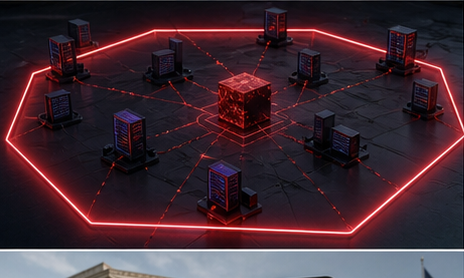
On August 7, 2026, OpenAI released an official statement saying that the latest internal evaluation of the upcoming Astra model showed that its agent programming and network security capabilities have been significantly improved. Based on expert assessments, the company concluded the night before the announcement: It cannot currently be ruled out that Astra reaches the Critical network capability level defined by the Preparedness Framework. OpenAI has therefore suspended all Astra internal activities that have not met the enhanced security control requirements, but has not announced a comprehensive halt to the research and development, training, evaluation or future release of the model.
Preliminary assessment has not yet confirmed the critical level
This conclusion comes from internal testing in the past few days before the announcement and is still preliminary in nature. OpenAI clearly wrote that "Critical capabilities cannot be ruled out", rather than confirming that Astra reaches this level; the company also said that it will continue to conduct benchmarking and evaluation. The official page does not publish the list of experts participating in the evaluation, the start time, duration, next review date or complete results of the test. Therefore, existing records cannot describe potential capabilities as model performance that has completed public verification.
According to OpenAI's Preparedness Framework, there are two types of determination paths for critical network capabilities: the model can identify and develop available zero-day vulnerabilities of various severity levels in many hardened real critical systems without human intervention; or it can design and execute new end-to-end network attack strategies for hardened targets based only on high-level targets. This is the definition of risk threshold and does not mean that Astra has completed the above tasks one by one. The announcement does not list which systems the model was tested on, nor does it give the number of zero-day vulnerabilities, success rates, attack chain results or evaluation scores.
Isolation, monitoring and sandboxing become the new conditions
OpenAI said it has expanded protection robustness testing and implemented stricter security controls for higher-capability models and related activities. The measures listed by the company include isolating test environments, restricting network and tool access, strengthening model weight protection and encryption, increasing monitoring and detection capabilities, and using sandbox execution. The list of measures indicates that internal conditions have changed, but the official has not disclosed the deployment scope, implementation time, bypass testing or independent verification results of each control. It cannot be presumed that the risk has been eliminated simply because the controls have been set up.
Universal monitoring covers all of Astra’s agent-based applications, including training and evaluation. OpenAI said that monitoring will evaluate the model's thinking chain; when high-risk activities are discovered, the system will trigger a security response to review and interrupt related activities. The announcement did not disclose detection rules, risk thresholds, false positive rates, false negative rates, manual review ratios, or the time required to complete reviews, nor did it provide effectiveness data that could be reproduced externally. Therefore, what can be confirmed at this stage is the monitoring mechanism and its targets, rather than its actual interception effect under different test conditions.
The external testing program has not yet announced the list of participants
External testing is also included in the next steps. OpenAI said it will test Astra’s capabilities with relevant government agencies and selected AI safety organizations, and provide third-party testing partners with recommendations for security controls for running models in high-risk assessments and workloads. The company did not release a list of institutions, organizations and partners, nor did it outline testing locations, schedules, workload ranges or how results would be released. The announcement also did not specify whether third-party partners would receive model weighting, or the specific process between external testing and any release decision.
Public summaries from both outlets used stronger generalizations about the conclusions and scope of the suspension. The TechCrunch summary stated that Astra reached the Critical cybersecurity threshold, and the headline stated that OpenAI was slowing down model development due to security concerns; The Verge headline described this action as putting the brakes on new models. OpenAI’s official statement is even narrower: the preliminary assessment cannot rule out the critical level at present, and the suspension targets internal activities that have not yet met the requirements for enhanced control. This publication does not substitute media summaries for the company's official conclusions, nor does it presume that all development activities have ceased.
Astra was not involved in the Hugging Face incident
OpenAI also made it clear that Astra was not involved in the previous Hugging Face exploit incident. The Verge summary mentioned this announcement in parallel with related events previously disclosed by OpenAI, but the background of this report cannot change the official clarification of the model’s identity. OpenAI also stated that the cutting-edge network capabilities of previous models, including GPT-5.6-Sol, were rated High instead of Critical. The different levels of company assessment cannot be used to derive Astra's architecture, parameters, benchmark scores, release dates or causal relationships with other events.
The Preparedness Framework was first released in December 2023. OpenAI said it is used to guide companies in planning responses when model capabilities change. The company also used the measures taken when the model approached the high biological capability threshold in June 2025 as a precedent, explaining that it also strengthened protection, expanded testing and cooperated with external experts at that time. For Astra, the next steps to verify the record include complete baseline conclusions, the effectiveness of enhanced controls, government and security organization testing, third-party high-risk assessment conditions, and any formal release arrangements. Officials haven't provided those results yet, nor have the Astra's exact launch date been announced.